Finding Your Daughter
- May 18, 2018
- 5 min read
A glimpse into what it takes to take home a child through the joys and hardships of adoption. Originally written as part of the feature spread of a class magazine about fatherhood.
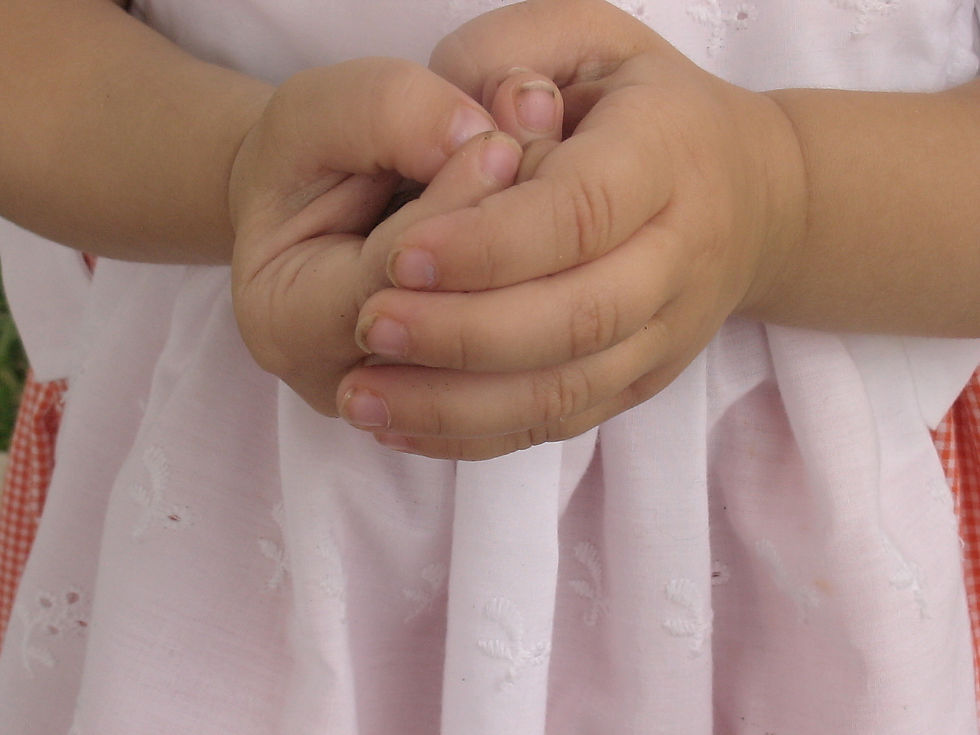
Image courtesy of user msburrows on Flickr
Your bright blue Converse shoes clap onto the pavement in the parking lot, contrasting sharply against the sun-baked blacktop. They had been tied for you in a rush by a nice lady you met more than a month ago, who takes you by the hand and walks with you to the doors. You wish you could tie shoes as fast and as good as she does. Maybe once you turn five soon, you can find someone who can teach you how.
You’ve realized recently that there are some things that are hard for you to remember. You don’t remember your second birthday party, or the house you originally came from, or the words from the picture book you read yesterday. But based on the anticipation (or fear?) you feel in the tight-gripped hand you’re holding, you can tell you’re going to be remembering this moment and this day for a long time.
You hold your favorite Spiderman action figure by the hand too as the three of you make your way towards the double doors of the restaurant, ready to meet some grownups you’ve heard lots of stories about. Hopefully Spiderman won’t be scared, but you’ll hold him tight just in case.

“After the DHS classes, the question we were asked when we were ready was, ‘What would you say no to?’ And for us at that point, that was a hard question to answer.”
John Hamilton’s quiet expression of emotional intelligence hardly makes him a background character at Fellowship Bible Church in Tulsa. His family has been behind the scenes in the church community for over a decade, encouraging their two daughters in the constant service that they’ve committed to. From the very beginning, the connection between them was nearly instantaneous.
“When we met at the restaurant for the first time it was supposed to be a blind meet,” he says. “But four-year-old Elie immediately just walks up to Kristy and says, ‘Are you my new mommy?’ It was really sweet.”
Deciding to adopt Elie and Katie together was an easy yes for the couple, which was a rare advantage given the fact that between 60 to 75 percent of siblings are separated when adopted in the United States. He hesitates to call this a decision of charity, though. They’re just following through on what they see as an improvement to their family, for the sake of their daughters.
His friend James Redman shares the same sentiment with his four daughters, who were all adopted from different parents at birth. The agency they used centers specifically around connecting birth moms to adoptive parents, as opposed to DHS’s general goal of giving sustainable families to kids in need. Because of this, the four Redman girls have solid relationships with their birth moms that give them the uniquely necessary gift of closure. The system worked out for them, in spite of shock and criticism from their loved ones in the beginning.
“There were a lot of friends and family members that told us we were rushing into things and don’t know what we’re doing,” he says. “That’s true, we didn’t know what we were doing. But it turned out to have a way better outcome than we could imagine.”
Every family’s struggles are unique, even with the same dynamics that unite us all. When it comes to adoptive families, the fulfillment of those dynamics often come at a cost, even when that cost is unseen.
“With your family, your mom and dad see certain characteristics in you that remind them of themselves, but we don’t have that” James says. “The gene pool is made from eight different sources God used to make these little people you’re sharing a house with.”
That can create a lot of self-doubt and second guesses, especially in the case of John’s girls whose adoption system required a mountain of screenings and checkups.
“I understand the point and I’m glad they do that, but with a lot of aspects of the process I would rather have had a root canal,” John says. “Like the DHS classes – those were brutal.”
For them it was a worthwhile burden to bear, especially given the circumstances.
“I saw the files from their former living situation,” John says. “It was not good.”
Bearing the responsibility for these little people is a unique weight that no dad can lift alone. Both James and John’s biggest piece of advice? Find your tribe and stick with them.
“God doesn’t call every parent to adopt, but like people attract.” John says. “You tend to group together because you understand one another and support each other.”
For this church community, faith, inclusion and intentional fatherhood go hand in hand. The self-sacrificing nature of leadership remains a theme at home, no matter where each child was made.
“It’s just like every family,” James says. “I feel the most fulfilled when I can see my girls grow and exemplify good character, and become the unique person that God created them to be.”


Comments